Discover

School Histories

Exhibit

Wisconsin Lutheran Seminary

At the 1862 Wisconsin Synod convention President Johannes Bading told the delegates about the deep-felt need for pastors that the synod had experienced since its founding in 1850. And the problem wasn’t getting any better.

“I believe that since the beginning of the synod the praesidium of synod has not felt the lack of preachers as they did this past synodical year. Old synodical congregations have been standing orphaned for many months.

So then, how can they call on the one they have not believed in? And how can they believe in the one about whom they have not heard? And how can they hear without a preacher? —Romans 10:14

Requests for preachers coming from new congregations who had not as yet joined the synod could not be granted even a hearing. … We must dig a well in our country, in our synod, that will supply the workers. If we expect to wait with the founding of such an institution until we are well-fixed financially, it will never materialize. … Well, then, dear brothers and friends, let us at this synodical convention draw up a plan for the establishment of an educational institution.

At the next convention, Bading noted how the synod “must always return to the matter of erecting our own theological seminary. The desire for it has long been expressed, the plan of founding it was pretty well thoroughly discussed at the last synod convention, now the time has come that it be vigorously implemented.” Bading encouraged the delegates not to focus so much on finances. While granting that they needed to be good stewards and do appropriate planning, “with [discussion of] costs alone, nothing is done [and] that discourages more in going ahead with the founding of a seminary. We have to place our trust for the costs in the almighty Savior.”

After many long years of stalling, the delegates finally pulled the trigger. During the afternoon of June 1, 1863, the convention resolved to establish a seminary, although an important question remained. Where should the seminary be located? The lot finally fell to Watertown, Wisconsin.

Since then, the Evangelical Lutheran Theological Seminary, later named Wisconsin Lutheran Seminary, has had several homes. But its purpose has always remained the same: to raise up men to preach the gospel. The timeline below highlights some the most important milestones in our seminary’s history.

Search Collections

Exhibits

Seminary in Thiensville 1929

  • 1863
  • June 1866
  • March 1870
  • 1870-78
  • 1877-78
  • September 1878
  • 1892-93
  • 1900
  • 1908
  • 1920
  • 1924-29
  • 1929
  • 1935-61
  • 1957
  • 1960-70s
  • 1980s
  • 1985
  • 1995
  • 2003
  • 2004
  • 2006
  • 2010
  • 2022
  • The seminary

    Seminary founded in 1863


  • A sudden resignation

    Eduard Moldehnke suddenly resigned as the director of the seminary after the synod called Pastor Adolf Hoenecke to serve as a second professor and inspector (dean of students). Moldehnke had been criticized by some for a lack of discipline among the student body, due partly to the fact that he was still serving as a traveling missionary for the synod and was often absent in his role as seminary director. On June 19, 1866, he submitted his letter of resignation.


    Professor Adolf Hoenecke

    Professor Adolf Hoenecke

    Moldehnke's letter of resignation

    Moldehnke’s letter of resignation

  • St. Louis

    After more than a decade of intersynodical strife, the Wisconsin and Missouri Synods declared each other orthodox Lutherans in October 1868 and soon agreed to share the work of pastoral training. Wisconsin Synod pastors would now receive their seminary training at Concordia Seminary, St. Louis, beginning in March 1870. In 1872 the two synods, along with four others, would establish the Synodical Conference in order to further joint work among confessional Lutherans in the American Midwest.


    Concordia Seminary in St Louis, Missouri in 1875

    Concordia Seminary in St Louis, Missouri (1870-1878)

  • Walther’s Wisconsin Synod legacy

    Wisconsin seminarians were trained under the directorship of C.F.W. Walther, the “Luther of American Lutheranism.” Among the Wisconsin men trained at St. Louis during these years were two future Wisconsin Synod seminary professors and directors, August Pieper and John Ph. Koehler, who graduated in 1879 and 1880, respectively.


    Concordia 1879

    Concordia 1879

    Concordia 1880

    Concordia 1880

    C.F.W. Walther

    C.F.W. Walther

  • The State Synod Controversy

    A proposal within the Synodical Conference to organize completely along state boundaries (State Synod Controversy) and to have one large seminary prompted the Wisconsin Synod to insist on its independence and reestablish its own seminary in Milwaukee, angering Walther among others.


    Milwaukee Seminary (1878-1893)

    Milwaukee Seminary (1878-1893)

  • Seminary relocated to Milwaukee

    An independent Wisconsin Synod seminary began classes with three professors, Adolf Hoenecke, August Graebner, and E.W.A. Notz. Seven young men made up the student body.

    Pastor Adolf Hoenecke

    Pastor Adolf Hoenecke

    August Graebner

    August Graebner

    E.W.A. Notz

    E.W.A. Notz

  • Federation formed

    The Wisconsin, Minnesota, and Michigan Synods formed a federation and agreed to train their seminarians together. The Minnesota Synod’s college and seminary in New Ulm became the teacher training college (Dr. Martin Luther College). The Michigan Synod’s college and seminary in Saginaw became a prep school (Michigan Lutheran Seminary). A new seminary building was constructed by the federation in Wauwatosa, Wis., a suburb of Milwaukee. These three synods (along with the Nebraska Synod) merged into one synod in 1917.


    The Wauwatosa Seminary

    The Wauwatosa Seminary

  • A second generation

    Beginning in 1900, a second generation of professors began to serve our seminary. Professor John Ph. Koehler was called to teach New Testament, hermeneutics (biblical interpretation), church history, and liturgics. Koehler utilized and promoted a theological approach that included self-criticism and a constant return to Scripture as the source of all teaching. August Pieper joined him in this approach in 1902 when he was called to teach Old Testament.


    Seminary class of 1896

    Seminary class of 1896

    Professor Joh. Ph. Koehler

    Professor Joh. Ph. Koehler

    Professor August Pieper

    Professor August Pieper

  • The Wauwatosa Gospel

    Hoenecke died on March 3, and Professor John Schaller was called to replace him as director and professor of dogmatics (doctrine), homiletics (preaching), and pastoral theology. Koehler, Pieper, and Schaller served together from 1908-1920 and became known for their theological approach, now known as the “Wauwatosa Theology” or “Wauwatosa Gospel.” In truth, their approach was simply a return to Martin Luther’s approach.


    WELS Professor John Schaller

    Prof John Schaller

    Wauwatosa Students 1917

    Wauwatosa Students 1917

    Systematic Theology

    Systematic Theology

    Pastoral theology

    Pastoral theology

  • A terrible loss

    On February 7, 1920, the seminary was stunned by the sudden loss of its director, John Schaller, when he died during an influenza outbreak. John P. Koehler was called to serve as the new director. John P. Meyer was tabbed to replace Schaller on the faculty and would serve until his death in 1964, the longest tenure of any professor in Wisconsin Lutheran Seminary history.


    Wauwautosa Students 1914

    Wauwautosa Students 1914

    Wauwatosa Faculty 1928

    Wauwatosa Faculty 1928

    Wauwatosa Faculty 1917

    Wauwatosa Faculty 1917

  • The Protes’tant Controversy

    The seminary faculty became involved in the Protes’tant Controversy that had its beginnings at Northwestern College in March 1924 and quickly spread throughout the synod. There was intra-faculty strife over a Gutachten (opinion) that they had issued concerning a conference paper that a young pastor named William Beitz had presented in 1926. Professor Gerhard Ruediger was forced to resign from the seminary faculty in January 1927 for his involvement in the controversy. When Koehler withdrew his name from the Gutachten, he was given a year’s sabbatical in 1929 and eventually dismissed from the seminary faculty in 1930.


    Northwestern Faculty 1925

    Northwestern Faculty 1925

    Professor Gerhard Ruediger

    Professor Gerhard Ruediger

    Professor Joh. Ph. Koehler

    Professor Joh. Ph. Koehler

  • Seminary relocated to Thiensville

    In the years leading up to his dismissal, Koehler helped design new seminary buildings that were planned first for a new location in Wauwatosa and then, ultimately, in Thiensville, Wis. (now Mequon). The new seminary buildings were dedicated on August 18, 1929.


    Seminary Cornerstone 1928

    Seminary Cornerstone 1928

    Koehler Joh Ph painting

    Koehler Joh Ph painting

    Thiensville Conceptual Blueprint

    Thiensville Conceptual Blueprint

    Thiensville Conceptual Blueprint

    Thiensville Conceptual Blueprint

    Thiensville Conceptual Drawing

    Thiensville Conceptual Drawing

    Thiensville Drawing

    Thiensville Drawing

  • Fellowship controversy

    The Wisconsin Synod and its seminary became involved in the Intersynodical Controversy when the Missouri Synod began to pursue fellowship ties especially with the American Lutheran Church. Some Missouri Synod theologians also began using a historical-critical method of theology that did not assume the Scriptures to be truly inspired or inerrant. The controversy ended with the Wisconsin Synod suspending fellowship with the Missouri Synod in August 1961.


    Exegetical Theology

    Exegetical Theology

  • Lawrenz presidency

    Seminary President Edmund Reim resigned his membership in the Wisconsin Synod and was dismissed as seminary president when he protested the synod’s continued fellowship with the Missouri Synod. Reim and others would eventually form the Church of the Lutheran Confession (CLC) and establish Immanuel Lutheran Seminary in 1960. Professor Carl Lawrenz became the next president of Wisconsin Lutheran Seminary, leading both the seminary and synod through these trying days.


    Professor Carl Lawrenz

    Professor Carl Lawrenz

    Professor Edmund ReimReim

    Professor Edmund Reim

  • Synod growth

    The synod and seminary began to experience unprecedented growth, mainly as a result of the Baby Boom (1945-1965). World and home missions were greatly expanded and the largest classes in seminary history were graduated and assigned. Building additions to the seminary complex were undertaken in the 1960s, including the construction of a new library and dormitory expansion.


    Faculty 1960s

    Faculty 1960s

    Library Missions

    Library Missions

    Professor Carl Lawrenz

    Professor Carl Lawrenz

  • Economy affects

    The recession of the late 1970s and early 1980s forced the synod to retract its mission growth and left many seminary graduates unassigned on Seminary Call Day.


    Seminary seal

    Seminary seal

    WLS class of 1971

    WLS class of 1971

    WLS class of 1981

    WLS class of 1981

  • Building addition

    An auditorium-gymnasium was built to provide a venue for concerts, graduation ceremonies, and other events.


    Seminary Chorus Christmas Auditorium

    Seminary Chorus Christmas Auditorium

    Seminary Auditorium Concert

    Seminary Auditorium Concert

  • Amalgamation

    The pre-seminary synod worker training system was downsized to one college (Martin Luther College, New Ulm, Minn.) and two prep schools (Luther Prep School, Watertown, Wis., and Michigan Lutheran Seminary, Saginaw, Mich.). Pastoral students would no longer receive their college education at Northwestern College, Watertown, which had been founded in 1865.


    Northwestern College

    Northwestern College

    Northwestern College prior to closing

    Northwestern College prior to closing


    Northwestern 1880

    Northwestern 1880

    The Moldehnke home

    The Moldehnke home


    Moldehnke House Plaque

    Moldehnke House Plaque

  • Non-traditional study

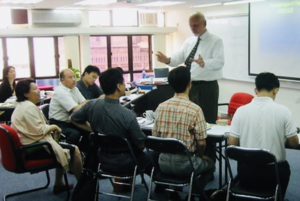
    The seminary established a Pastoral Studies Institute (PSI), a program geared toward non-traditional students from other cultures. 32 PSI students have graduated from the seminary since then.


    Asia Lutheran Seminary in the early years - Prof. E. Allen Sorum with students in 2005

    In Asia, PSI helps train 274 students in programs coordinated through the Asia One Team or national partners

    Explore: PSI Photo Gallery | PSI History

  • Seminary Anniversary

    The seminary chapel was renovated as part of the 75th anniversary celebration of the Mequon seminary campus.


    Seminary Organ

    Seminary Organ

  • Mission focus

    In cooperation with the WELS World Mission Board, the seminary called Professor Ken Cherney to serve as the first world mission seminary professor. Cherney teaches one semester at the Mequon campus every year and then teaches courses at different world seminaries in our fellowship throughout the rest of the year.


    Cherney GRATSI

    Since 2010, the Greater Africa Theological Studies Institute (GRATSI) has been jointly administered by the Lusaka Seminary and Wisconsin Lutheran Seminary.

  • Continuing Education

    Professor Richard Gurgel was called to oversee a synod-wide continuing education program for pastors (Grow in Grace) in an effort to encourage continued growth in parish ministry.


    Grow in Grace

    Grow in Grace

  • Seminary location summary

    The Wisconsin Lutheran Seminary, has had several homes. But its purpose has always remained the same: to raise up men to preach the gospel.


    The Moldehnke home

    The Moldehnke home

    The Kaffeemuehle

    The Kaffeemuehle


    Concordia Seminary in St Louis, Missouri in 1875

    Concordia Seminary in St Louis, Missouri (1870-1878)

    Milwaukee Seminary (1878-1893)

    Milwaukee Seminary (1878-1893)


    Wauwatosa Seminary (1893-1929)

    Wauwatosa Seminary (1893-1929)

    Thiensville:Mequon Campus (1929-present)

    Thiensville:Mequon Campus (1929-present)